Amendment 100, Plainly: What Arkansas Approved and What It Still Does Not Allow
Amendment 100 to the Arkansas Constitution established a rigid legal framework authorizing exactly four casino licences across four designated counties, placing all commercial gambling…
Amendment 100 to the Arkansas Constitution established a rigid legal framework authorizing exactly four casino licences across four designated counties, placing all commercial gambling operations under the direct authority of the Arkansas Racing Commission. The measure confines casino operations entirely to Crittenden, Garland, Pope, and Jefferson counties, prohibiting commercial casino gambling in the remaining 71 counties of the state.
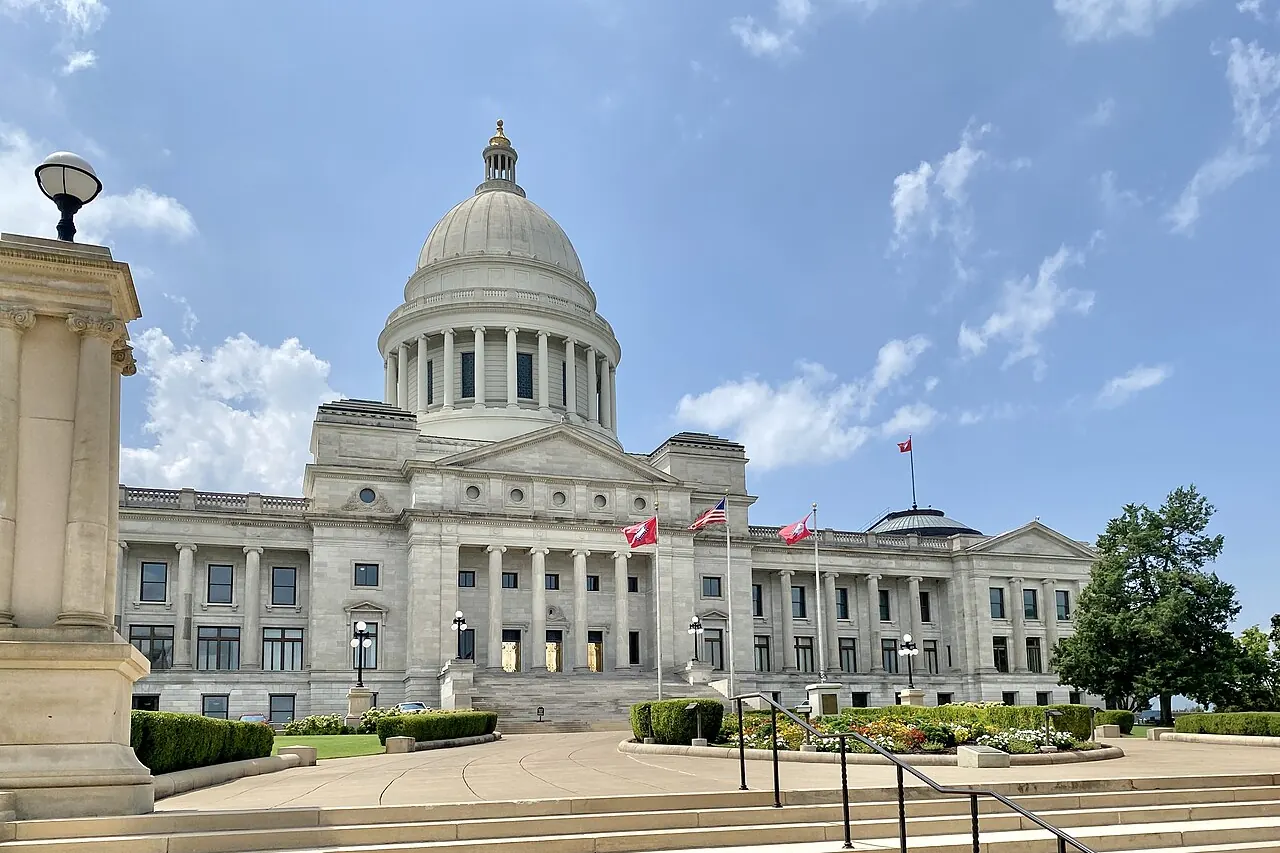
Understanding the amendment requires separating what the constitutional text explicitly wrote into law from the regulatory details managed by state agencies. The constitutional measure defines the tax rates, names the geographical locations, and defines casino gaming, while leaving the administrative mechanics, application procedures, and day-to-day enforcement to state regulators.
Four Casino Licences Locked to Four Specific Counties
The constitutional amendment establishes a hard numerical cap on commercial casino operations in Arkansas. Section 4 authorizes four casino licences, assigning one licence to each of four specific counties.
| Licence Allocation | Designated County | |---|---| | Licence 1 | Crittenden County | | Licence 2 | Garland County | | Licence 3 | Pope County | | Licence 4 | Jefferson County |
The constitutional text does not permit the Arkansas Racing Commission to create a fifth licence or transfer an authorized licence to an unlisted county. A commercial casino cannot legally open in Pulaski, Sebastian, Washington, or Benton County under this amendment. Expanding casino gaming to any location outside the four named counties would require Arkansas voters to approve a separate constitutional amendment altering those geographic boundaries.
Operating outside this four-licence structure is illegal under state law. Arkansas Racing Commission rules state explicitly that no individual or entity may conduct casino gaming anywhere in Arkansas without a casino licence issued by the Commission.
How the Constitution Defines Casino Gaming and Sports Wagering
The amendment provides a specific legal definition of what activities constitute casino gaming. Under the text, casino gaming means "dealing, operating, carrying on, conducting, maintaining, or exposing for play" any game played with cards, dice, equipment, or electronic devices or machines for money, property, checks, credit, or any representative value.
This statutory phrasing covers traditional casino floor operations:
- Card games operated by dealers or electronic terminals.
- Dice games and physical table equipment.
- Electronic gaming devices, including slot machines and video poker terminals.
- Games conducted for cash, electronic credits, chips, or property.
The constitutional definition includes another major wagering category. The amendment expressly states that casino gaming includes accepting wagers on sporting events. By writing sports betting directly into the definition of casino gaming, the amendment brought sports wagering under the same constitutional and regulatory umbrella that governs slot machines and table games.
Because the amendment ties sports wagering directly to the definition of casino gaming, the authority to conduct that wagering belongs exclusively to the entities holding the authorized casino licences. It does not create a separate, unattached commercial market for sports betting operators unconnected to the licensed casino facilities.
The Two-Tier Tax Rate on Net Gaming Receipts
Taxation under Amendment 100 operates on a graduated scale based on each casino licensee's annual gross gaming performance. The amendment sets out a two-tier tax structure tied directly to a licensee's net casino gaming receipts in each fiscal year.
The tax rates written into the constitutional text apply as follows:
- A 13 percent tax applies to the first $150,000,000 of a casino licensee's net casino gaming receipts for each fiscal year.
- A 20 percent tax applies to all net casino gaming receipts above $150,000,000 for each fiscal year.
This tax applies strictly to gaming receipts, but the amendment also addresses general corporate taxation. Each casino licensee remains subject to the same income, property, sales, gross receipts, use, employment, and other business taxes that apply to any standard for-profit commercial business operating in the respective county and city.
The amendment includes a specific tax protection for casino operators. The text mandates that no general sales tax or gross receipts tax can be levied on casino gaming receipts or net casino gaming receipts. While a casino must pay local and state sales taxes on food sales, hotel accommodations, merchandise, and retail transactions, the revenue generated directly on the gaming floor is taxed exclusively through the 13 percent and 20 percent constitutional rates.
Arkansas Racing Commission Powers and Regulatory Authority
The constitutional text does not manage the day-to-day inspection, rule-making, and licensing selection processes directly. Under Section 4 of Amendment 100, the Arkansas Racing Commission "shall administer and regulate casino licenses, including their issuance and renewal" and "shall administer and enforce" the amendment's provisions.
To carry out that mandate, the Arkansas Racing Commission established an administrative framework under Part 358 of its regulatory code. Under 23 CAR § 358-201, the Commission's rules formally govern application procedures along with the specific selection methods and evaluation criteria the Commission applies to award licences. The rule set confirms that these administrative provisions are issued directly under the constitutional amendment and cannot be construed in a manner that conflicts with the amendment or other applicable state statutes.
Operational oversight is managed through the Casino Gaming Section of the Arkansas Department of Finance and Administration. This administrative section handles overall regulatory compliance. Its staff develops operational standards, processes regulatory filings, and employs personnel tasked with on-site inspection and state enforcement duties across all licensed facilities.
The Boundaries: What the Constitutional Text Leaves to Rules
Amendment 100 acts as an enabling constitutional framework, not an exhaustive operational manual. It outlines what is legally permissible at a macro level, leaving administrative mechanisms to the Arkansas Racing Commission.
The text settles several core questions with absolute finality:
- Only four casino licences can exist in Arkansas.
- Those licences belong exclusively to Crittenden, Garland, Pope, and Jefferson counties.
- Net gaming receipts face a 13 percent tax up to $150,000,000 and 20 percent thereafter.
- No commercial entity may operate games of chance without a Commission-issued licence.
The amendment does not draft the technical operating standards for equipment, the precise criteria for background investigations, or the detailed licensing dispute processes within its text. Those operational standards originate from the Arkansas Racing Commission rules and Department of Finance and Administration compliance guidelines.
The constitutional measure sets the outer legal boundaries of commercial gaming in Arkansas. Everything falling within those boundaries—from initial application scoring to daily floor regulation—operates strictly through the rules adopted and enforced by the Arkansas Racing Commission.
No byline, on purpose. Material here is signed by the desk and not by an invented person: if you see a name on a page, it belongs to someone quoted or to the author of a document, never to a persona we made up to look like a staff of ten.
Each number has an owner. Revenue lines, tax shares, licence numbers and dates are copied from the filing, report or operator page that holds them, and the sentence using a figure says where it came from. Where the source has no figure, this site leaves the sentence out instead of estimating one.
Mistakes get fixed in place. Point one out at [email protected]: the wrong line is rewritten on the page you read it on, with the old wording quoted underneath, so the change is visible rather than quietly swallowed.